Watch and learn
Warning: Undefined variable $post_id in /home/webpages/lima-city/booktips/wordpress_de-2022-03-17-33f52d/wp-content/themes/fast-press/single.php on line 26
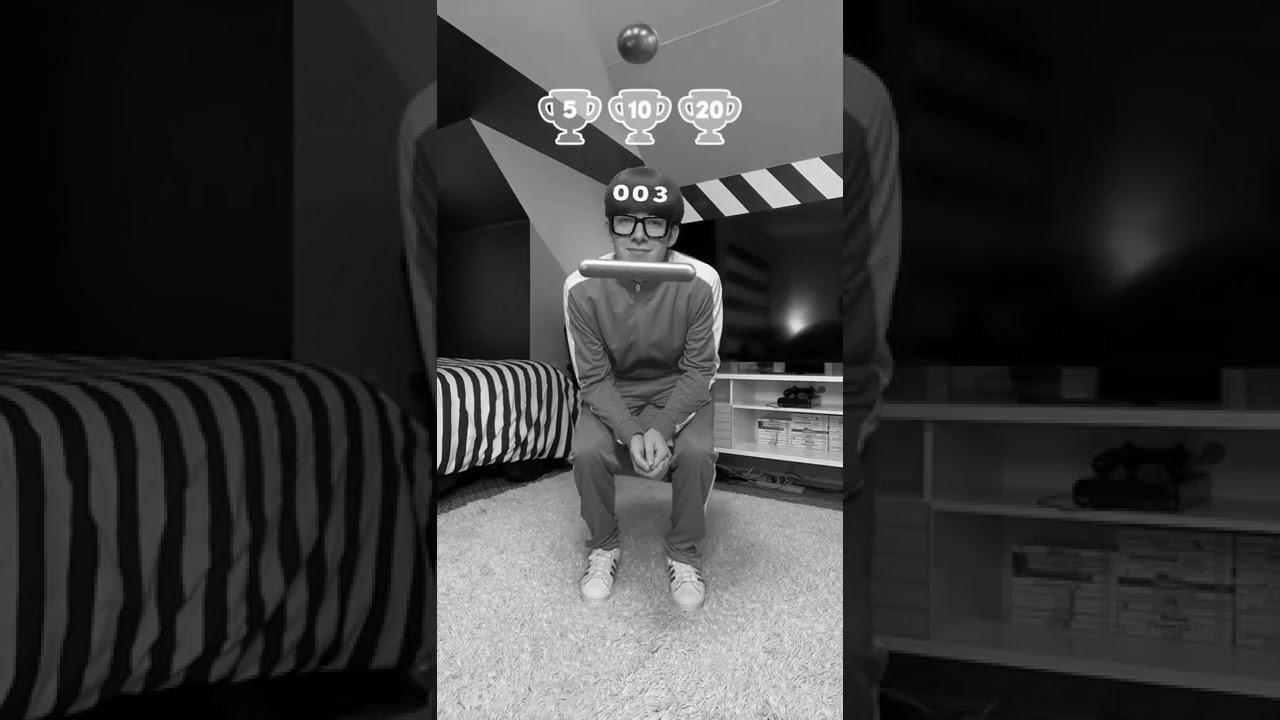
Study , Watch and study , , uy8n9izF01k , https://www.youtube.com/watch?v=uy8n9izF01k , https://i.ytimg.com/vi/uy8n9izF01k/hqdefault.jpg , 18313028 , 5.00 , shorts. , 1652319446 , 2022-05-12 03:37:26 , 00:00:46 , UCzJ53fi4NuDCYWOk9PtEkCA , _vector_ , 1301959 , , [vid_tags] , https://www.youtubepp.com/watch?v=uy8n9izF01k , [ad_2] , [ad_1] , https://www.youtube.com/watch?v=uy8n9izF01k, #Watch #learn [publish_date]
#Watch #study
shorts.
Quelle: [source_domain]
- Mehr zu learn Encyclopedism is the work on of feat new apprehension, cognition, behaviors, profession, values, attitudes, and preferences.[1] The power to learn is demoniacal by human, animals, and some machinery; there is also testify for some kind of encyclopaedism in indisputable plants.[2] Some encyclopedism is proximate, induced by a ace event (e.g. being hardened by a hot stove), but much skill and cognition lay in from repeated experiences.[3] The changes spontaneous by education often last a lifespan, and it is hard to identify well-educated material that seems to be "lost" from that which cannot be retrieved.[4] Human encyclopedism starts at birth (it might even start before[5] in terms of an embryo's need for both interaction with, and immunity within its situation inside the womb.[6]) and continues until death as a result of current interactions 'tween people and their environment. The trait and processes caught up in encyclopaedism are studied in many established w. C. Fields (including educational psychological science, physiological psychology, psychonomics, cognitive sciences, and pedagogy), besides as future fields of knowledge (e.g. with a common fire in the topic of learning from safety events such as incidents/accidents,[7] or in collaborative encyclopedism well-being systems[8]). Investigate in such fields has led to the recognition of assorted sorts of education. For good example, encyclopaedism may occur as a outcome of dependency, or classical conditioning, conditioning or as a issue of more intricate activities such as play, seen only in relatively natural animals.[9][10] Encyclopedism may occur consciously or without conscious knowingness. Eruditeness that an dislike event can't be avoided or escaped may event in a shape known as learned helplessness.[11] There is show for human activity education prenatally, in which habituation has been ascertained as early as 32 weeks into gestation, indicating that the central uneasy arrangement is sufficiently formed and set for encyclopedism and faculty to occur very early on in development.[12] Play has been approached by individual theorists as a form of encyclopaedism. Children experiment with the world, learn the rules, and learn to act through and through play. Lev Vygotsky agrees that play is pivotal for children's maturation, since they make substance of their state of affairs through and through musical performance educational games. For Vygotsky, even so, play is the first form of eruditeness nomenclature and human activity, and the stage where a child started to see rules and symbols.[13] This has led to a view that learning in organisms is always age-related to semiosis,[14] and often related to with figural systems/activity.
BRUH
—-!CHEATING DETECTED!—-
L
Heir you can help 😳👍
I realize so your just like me should go in the background
Guy:way too easy vetor:28? 10 seconds later Me:WHA-900 ALREADY?! also me:Ahhahahahahahahhahagahahahahahahhahhahahahahhahahhhah
New life hack 😂😂😂
OH YAAASSS! UNPREEEDICTABLE
Hr broke the game
ãmøgüš
Still
You cheat
Literally a genius
Bro u broke the system
That's my boy easy
Nobody can beat me
Vector
I'm boutta end this man's whole career
Wow
I got 1200
Show off
Once again Victor please that IQ is Apple
That Doesnt count camper
His neck: p a i n
Cheat
My boy vector really stood there for about and hour
Him;I bet no one can beat me
Vector ; gets to 900
Him sees the vid: 0_0
Where did you find the game?
Give us the link please.
POV someone gets 1,000
Big brain
200 iQ
Rip my ears
When you activate cheat code XD
That’s how a god does it
I got 1,000,000
bro he said easy but hi miss the ball lol
This made my 🤣 to much
Dude had to spend decades just to beat this guy
What's the game called